Why Some Logistics Companies Still Fall Victim to Ransomware After Cloud Migration

Ransomware attacks are becoming one of the biggest cybersecurity threats facing the logistics industry today. As logistics companies accelerate their digital transformation initiatives, many are investing in cloud technologies to improve scalability, operational efficiency, and supply chain visibility. However, a common misconception is that moving to the cloud automatically eliminates cyber risks. In reality, cloud migration without a comprehensive security strategy can leave critical systems, applications, and data vulnerable to sophisticated ransomware attacks. This article explores why some logistics companies continue to fall victim to ransomware after cloud migration, the security gaps attackers exploit, and the practical steps organizations can take to strengthen cloud security and build a more resilient supply chain.
Key Takeaways
Cloud migration improves scalability but does not eliminate cyber risks.
Ransomware remains a major threat to logistics businesses.
Misconfigurations and poor access controls are leading causes of cloud-related breaches.
Supply chain cybersecurity requires protection beyond internal systems.
Continuous monitoring, Zero Trust, and employee awareness are critical.
Secure cloud migration should always include a cybersecurity strategy.
Logistics companies need specialized cloud security expertise to reduce ransomware exposure.
Why Logistics Companies Are Prime Targets for Ransomware Attacks
The logistics industry has become a preferred target for ransomware groups due to its heavy reliance on digital systems, real-time operations, and interconnected supply chains. Modern logistics businesses manage vast amounts of sensitive data while supporting time-critical transportation, warehousing, and distribution activities. Any disruption can lead to delayed shipments, operational chaos, and significant financial losses. Understanding why attackers frequently target logistics organizations is the first step toward building a stronger cybersecurity strategy.
Rapid Digital Transformation Expands the Attack Surface
Logistics companies are increasingly adopting cloud platforms, IoT-enabled fleet tracking, warehouse management systems, AI-driven analytics, and automation tools to improve operational efficiency. While these technologies enhance visibility and productivity, they also introduce new entry points for cybercriminals. Every connected application, device, and integration can become a potential vulnerability if not properly secured, making digital transformation both an opportunity and a cybersecurity challenge.
High-Value Operational and Customer Data Attracts Attackers
Logistics organizations store large volumes of valuable information, including shipment records, customer details, supplier contracts, inventory data, payment information, and transportation schedules. This data is highly attractive to ransomware operators because it can be encrypted, stolen, or used for extortion. The potential financial and reputational damage caused by a data breach often increases the pressure on organizations to respond quickly to cyber incidents.
Supply Chain Dependencies Create Immediate Business Pressure
Modern supply chains depend on seamless communication between logistics providers, suppliers, carriers, warehouses, and customers. A ransomware attack affecting a single organization can disrupt multiple partners across the supply chain ecosystem. Because logistics operations are highly interconnected and time-sensitive, attackers know that businesses may face significant pressure to restore systems quickly, making the industry an attractive target for ransomware campaigns.
Operational Downtime Can Result in Significant Financial Losses
Unlike many industries where short disruptions may be manageable, logistics companies rely on continuous operations to maintain service levels and customer satisfaction. A ransomware attack can halt shipments, delay deliveries, disrupt inventory management, and impact revenue generation. Beyond immediate losses, organizations may also face recovery costs, regulatory penalties, contractual obligations, and long-term reputational damage, making downtime one of the most expensive consequences of a cyberattack.
Understanding the Relationship Between Cloud Migration and Cybersecurity
Cloud migration helps logistics businesses improve scalability, flexibility, and operational efficiency, but it does not automatically eliminate cyber threats. Organizations adopting Cloud Migration Services for Logistics Companies can modernize legacy infrastructure, enhance supply chain visibility, and support remote operations more effectively. However, migration alone cannot prevent ransomware attacks or unauthorized access. To achieve long-term resilience, businesses must combine cloud adoption with strong security policies, continuous monitoring, and proactive risk management throughout their digital transformation journey.
What Cloud Migration Actually Solves
Cloud migration helps logistics companies improve scalability, operational flexibility, application performance, and cost efficiency. It enables organizations to modernize legacy systems, support remote operations, and gain better visibility across supply chain processes. However, these benefits focus primarily on infrastructure and operational improvements rather than complete cybersecurity protection.
What Cloud Migration Does Not Solve
Moving to the cloud does not automatically prevent ransomware, phishing attacks, unauthorized access, or data breaches. If security controls are not properly implemented, attackers can still exploit vulnerable applications, weak credentials, and cloud misconfigurations. Effective cybersecurity requires continuous monitoring, governance, and risk management beyond migration itself.
Understanding the Shared Responsibility Model
Cloud providers secure the underlying infrastructure, but customers remain responsible for protecting their applications, data, identities, and access controls. This shared responsibility model is often misunderstood. Logistics companies must actively manage security configurations, user permissions, backups, and compliance requirements to maintain a secure cloud environment.
Common Misconceptions Among Logistics Businesses
Many logistics organizations believe that cloud providers handle all aspects of cybersecurity. Others assume that cloud migration alone eliminates cyber threats. In reality, cloud security requires ongoing attention, employee awareness, access management, and proactive threat detection. Without these measures, cloud-based systems can remain vulnerable to ransomware attacks.
The Most Common Cloud Migration Security Mistakes Logistics Companies Make

Cloud migration can deliver significant operational benefits, but security mistakes during or after migration often create opportunities for cybercriminals. Many ransomware incidents occur because organizations focus on migration speed and performance while overlooking critical security controls. Understanding these common mistakes can help logistics companies strengthen their cybersecurity posture and reduce risk.
Migrating Applications Without a Security Strategy
Many logistics companies prioritize speed during migration and overlook security planning, which often transfers existing vulnerabilities into the new environment. Partnering with providers that offer cloud application migration services enables organizations to assess risks, modernize legacy applications, and strengthen security controls before deployment. A security-first migration approach helps reduce ransomware exposure, improves compliance, and ensures business-critical systems remain protected. Proper planning during application migration creates a stronger foundation for long-term operational resilience and cybersecurity.
Misconfigured Cloud Environments
Cloud misconfigurations remain one of the leading causes of security breaches. Incorrect storage permissions, exposed databases, unsecured APIs, and improperly configured services can create easy entry points for attackers. Regular security audits and configuration reviews are essential for maintaining a secure cloud environment.
Weak Identity and Access Management Controls
Poor access management can significantly increase cybersecurity risks. Excessive user privileges, weak passwords, and the absence of multi-factor authentication make it easier for attackers to gain unauthorized access. Strong identity and access management practices help limit exposure and reduce the impact of compromised accounts.
Inadequate Backup and Disaster Recovery Planning
Many logistics companies underestimate the importance of secure backups and recovery procedures. Without reliable backup systems, ransomware attacks can cause extended downtime and data loss. A well-designed disaster recovery strategy ensures critical systems and information can be restored quickly after a security incident.
Lack of Continuous Monitoring and Threat Detection
Cyber threats evolve constantly, making continuous monitoring a critical component of cloud security. Organizations that rely solely on preventive controls may fail to detect suspicious activity until significant damage occurs. Real-time threat detection, security monitoring, and incident response capabilities help identify and contain threats before they escalate.
How Ransomware Attacks on Logistics Companies Actually Happen
Ransomware attacks rarely occur through a single vulnerability. Instead, cybercriminals exploit weaknesses across people, processes, applications, and third-party systems to gain access to critical business environments. Because logistics companies depend on cloud platforms, connected technologies, and extensive partner networks, attackers have multiple opportunities to infiltrate systems. Understanding the most common attack methods can help organizations strengthen defenses and reduce the risk of ransomware incidents.
Phishing and Social Engineering
Phishing remains one of the most effective ransomware delivery methods. Attackers use deceptive emails, fake login pages, and social engineering tactics to trick employees into revealing credentials or downloading malicious files. Once access is gained, cybercriminals can move through systems, steal sensitive information, and deploy ransomware across critical logistics operations.
Compromised Third-Party Vendors
Logistics companies rely heavily on suppliers, transportation partners, software vendors, and service providers. If a trusted third-party organization experiences a security breach, attackers may use that connection to access connected systems. These supply chain attacks have become increasingly common because they allow cybercriminals to target multiple organizations through a single compromise.
Unsecured Cloud Applications
Cloud applications improve operational efficiency but can also introduce security risks when not properly protected. Weak authentication controls, outdated software, and insecure configurations create opportunities for attackers to gain unauthorized access. Once inside a cloud environment, ransomware operators often search for valuable data and critical business systems to maximize impact.
Vulnerable APIs and Integrations
Modern logistics platforms rely on APIs to exchange information between applications, customers, carriers, and suppliers. Poorly secured APIs can expose sensitive data and provide direct access to internal systems. Attackers frequently target API vulnerabilities because they offer an efficient way to bypass traditional security controls and access critical resources.
Remote Workforce Security Gaps
The growth of remote and hybrid work has expanded the attack surface for many logistics organizations. Employees accessing systems from personal devices or unsecured networks can unintentionally create vulnerabilities. Without proper endpoint security, multi-factor authentication, and employee awareness training, remote work environments can become attractive targets for ransomware campaigns.
Major Cloud Security Risks Facing Logistics Companies in 2026
As cloud adoption continues to accelerate, logistics companies face a rapidly evolving cybersecurity landscape. While cloud environments offer flexibility and scalability, they also introduce new security challenges that require proactive management. Understanding these risks is essential for protecting business operations, customer data, and supply chain continuity in 2026 and beyond.
Multi-Cloud Complexity
Many organizations use multiple cloud providers to support different business requirements. While this approach improves flexibility, it can also create visibility gaps and inconsistent security controls. Managing security policies across multiple environments becomes increasingly difficult, increasing the likelihood of misconfigurations and overlooked vulnerabilities.
Shadow IT and Unmanaged Applications
Employees often adopt unauthorized applications and cloud services to improve productivity without involving IT teams. These unmanaged tools may lack proper security controls and create hidden risks within the organization. Shadow IT reduces visibility, complicates governance efforts, and increases the potential for data exposure and ransomware infections.
IoT and Connected Fleet Vulnerabilities
Modern logistics operations depend on connected devices such as GPS trackers, telematics systems, smart sensors, and fleet management platforms. While these technologies improve operational efficiency, they also create additional entry points for attackers. Poorly secured IoT devices can provide a pathway into broader business networks and cloud environments.
Supply Chain Attack Vectors
Supply chains are becoming increasingly interconnected, with multiple organizations sharing systems, applications, and data. Attackers often target weaker partners within the ecosystem to gain access to larger organizations. These attack vectors make supply chain cybersecurity a critical component of any comprehensive cloud security strategy.
Insider Threats and Privilege Abuse
Not all security threats originate from external attackers. Employees, contractors, and third-party users with excessive access privileges can intentionally or unintentionally expose sensitive information. Poor access management practices increase the risk of insider threats, making role-based permissions and continuous monitoring essential security controls.
The Real Business Impact of Ransomware in Logistics Companies
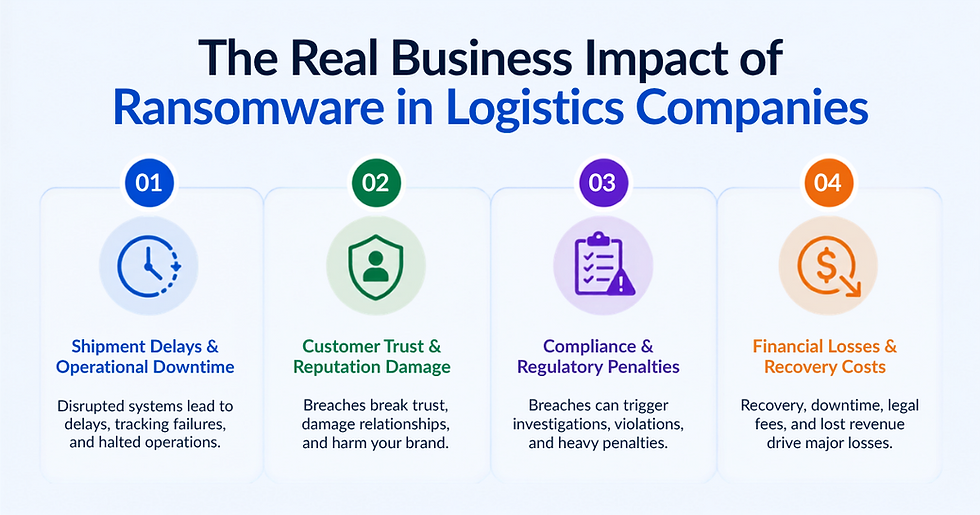
Ransomware attacks affect far more than IT systems. For logistics organizations, a successful attack can disrupt operations, impact customer relationships, damage brand reputation, and create long-term financial consequences. Understanding the broader business impact highlights why cybersecurity should be treated as a strategic business priority rather than simply a technical concern.
Shipment Delays and Operational Downtime
Logistics operations depend on real-time visibility, transportation management systems, warehouse platforms, and communication networks. When ransomware encrypts critical systems, shipments may be delayed, inventory tracking can fail, and business oper
ations may come to a standstill. Even a short disruption can have significant consequences across the supply chain.
Customer Trust and Reputation Damage
Customers expect logistics providers to deliver reliable services and protect sensitive information. A ransomware incident can undermine confidence, damage long-term business relationships, and create negative publicity. Rebuilding trust after a cybersecurity breach often requires significant time, investment, and ongoing communication efforts.
Compliance and Regulatory Penalties
Organizations that experience data breaches may face regulatory investigations and compliance violations. Depending on the type of information exposed, logistics companies could be subject to reporting requirements, legal obligations, and financial penalties. Strong cybersecurity controls help reduce compliance risks and demonstrate responsible data protection practices.
Financial Losses and Recovery Costs
The financial impact of ransomware extends far beyond ransom payments. Businesses often face recovery expenses, system restoration costs, incident response fees, legal consultations, and lost revenue from operational disruptions. For many logistics companies, the total cost of a ransomware attack can significantly exceed the investment required for proactive cybersecurity measures.
Best Practices to Strengthen Logistics Cybersecurity After Cloud Migration
Strengthening cybersecurity after cloud migration requires more than preventive controls. Logistics organizations should implement Zero Trust architecture, multi-factor authentication, continuous monitoring, and regular security assessments to minimize ransomware risks. Working with experienced cloud security solution providers helps businesses identify vulnerabilities, improve threat detection capabilities, and maintain compliance with evolving industry standards. By adopting a proactive security strategy, companies can safeguard sensitive data, enhance operational continuity, and build a more resilient logistics ecosystem.
Implement a Zero Trust Security Model
Zero Trust is based on the principle of "never trust, always verify." Instead of automatically trusting users or devices within the network, every access request is continuously validated. This approach helps logistics companies reduce unauthorized access, limit lateral movement by attackers, and protect critical applications, cloud environments, and sensitive business data from ransomware threats.
Secure Cloud Configurations Continuously
Cloud environments constantly evolve as applications, users, and services change over time. Without continuous oversight, security misconfigurations can emerge and create vulnerabilities. Organizations should regularly review cloud settings, storage permissions, network policies, and access controls to ensure their environments remain secure and compliant with industry best practices.
Deploy Multi-Factor Authentication Everywhere
Passwords alone are no longer sufficient to protect modern cloud environments. Multi-factor authentication (MFA) adds an additional layer of security by requiring users to verify their identity through multiple methods. Even if login credentials are compromised, MFA significantly reduces the risk of unauthorized access and helps prevent ransomware operators from gaining control of critical systems.
Strengthen Backup and Recovery Strategies
A reliable backup and disaster recovery plan is one of the most effective defenses against ransomware. Logistics companies should maintain secure, regularly tested backups that are isolated from production environments. Strong recovery capabilities enable organizations to restore operations quickly, minimize downtime, and reduce the business impact of cyber incidents.
Conduct Regular Security Assessments
Cybersecurity threats evolve continuously, making regular security assessments essential for identifying weaknesses before attackers do. Vulnerability assessments, penetration testing, configuration reviews, and risk evaluations help organizations uncover security gaps, prioritize remediation efforts, and improve overall cyber resilience across cloud and on-premises environments.
Train Employees Against Phishing Attacks
Human error remains one of the leading causes of cybersecurity incidents. Employees should be trained to recognize phishing emails, suspicious links, social engineering attempts, and other common attack techniques. Ongoing security awareness programs help create a security-conscious culture and reduce the likelihood of ransomware infections originating from employee actions.
How Cloud Security and Supply Chain Cybersecurity Work Together
Modern logistics operations extend far beyond internal systems and cloud environments. Organizations depend on a complex ecosystem of suppliers, transportation partners, software providers, warehouses, and customers. As a result, cloud security and supply chain cybersecurity must work together to create a comprehensive defense strategy. Securing only internal infrastructure is no longer enough when cyber risks can originate from any connected partner or third-party system.
Protecting Logistics Ecosystems Beyond the Cloud
Cloud security focuses on protecting applications, data, identities, and infrastructure within cloud environments. However, logistics operations involve multiple external connections that extend beyond organizational boundaries. A comprehensive cybersecurity strategy must address risks across the entire ecosystem, ensuring that every connected system and business process is adequately protected against emerging threats.
Securing Third-Party Partners and Vendors
Third-party vendors often have access to critical systems, operational data, and business applications. While these partnerships improve efficiency, they can also introduce significant cybersecurity risks. Logistics companies should evaluate vendor security practices, establish access controls, perform regular security reviews, and ensure third-party partners meet cybersecurity requirements to reduce supply chain attack exposure.
Building Cyber Resilience Across the Supply Chain
Cyber resilience goes beyond preventing attacks—it focuses on maintaining business continuity during and after a security incident. Logistics organizations should develop coordinated response plans, strengthen collaboration with partners, implement continuous monitoring, and regularly test recovery procedures. A resilient supply chain can withstand disruptions more effectively and recover faster from ransomware attacks and other cyber threats.
Why SISGAIN Is the Right Partner for Secure Cloud Migration and Logistics Cybersecurity
SISGAIN combines industry expertise with advanced cybersecurity capabilities to help logistics organizations build secure and scalable digital ecosystems. In addition to delivering cloud migration and security solutions, SISGAIN also operates as a custom logistics software development company, providing tailored platforms designed for modern supply chains. From application modernization and cloud security to intelligent logistics solutions, the company enables businesses to strengthen cyber resilience, optimize operations, and support sustainable growth while minimizing the risk of ransomware attacks.
Conclusion
Cloud migration is a powerful step toward modernizing logistics operations, but it should never be viewed as a complete cybersecurity solution. As ransomware threats continue to evolve, logistics companies must integrate security into every stage of their cloud journey, from planning and migration to ongoing monitoring and risk management. A proactive approach to cloud security, access control, employee awareness, and supply chain protection can significantly reduce cyber risks. By investing in the right cybersecurity strategy today, organizations can build a more resilient, secure, and future-ready logistics ecosystem while minimizing the impact of potential ransomware attacks.
Frequently Ask Questions ?
Why are logistics companies targeted by ransomware?
Because logistics companies rely on continuous operations, real-time tracking systems, customer data, and supply chain networks. Attackers know that operational disruption can pressure organizations into paying ransoms quickly.
Does moving to the cloud prevent ransomware attacks?
No. Cloud migration improves infrastructure flexibility and scalability, but ransomware can still exploit misconfigurations, weak access controls, phishing attacks, and insecure applications.
What is the biggest cloud security risk for logistics companies?
Misconfigured cloud environments, excessive user permissions, insecure APIs, and inadequate monitoring are among the most common cloud security risks.
How can logistics companies improve cybersecurity after cloud migration?
Organizations should implement Zero Trust security, multi-factor authentication, continuous monitoring, employee training, and regular security assessments.
What role does supply chain cybersecurity play in ransomware prevention?
Supply chain cybersecurity helps protect vendors, partners, connected systems, and third-party integrations that attackers often use as entry points for ransomware campaigns.


Mình có lần lướt đọc mấy trao đổi trên mạng شيخ روحاني thì thấy nhắc nên cũng tò mò mở ra xem thử cho biết. Mình không tìm hiểu sâu جلب الحبيب chỉ xem qua trong thời gian ngắn để quan sát bố cục جلب الحبيب cách sắp xếp شيخ روحاني các mục và trình bày nội شيخ روحاني dung tổng thể. Cảm giác là các phần được trình bày khá gọn, các huren berlin mục rõ ràng nên đọc lướt cũng không bị rối với mình như Hurentest Berlin vậy là đủ để nắm tin cơ bản rồi. جلب الحبيب
,
,